
Best Graphics Cards for PC Builds UK (2026)

Choosing the right graphics card starts with the workload, monitor resolution, software support and VRAM requirement—not simply the most expensive GPU. UK component pricing is unusually volatile in 2026, so this guide uses indicative ranges and current source checks rather than pretending a retailer price will stay fixed.
The recommendations below are research-led. We compared current manufacturer information with independent category or workload testing and deliberately call out compatibility, value and limitations. No product is described as hands-on tested by The Tools and Tech unless that actually happens later.
Quick answer
At a glance
| Option | Best for | Why it stands out | Main trade-off |
|---|---|---|---|
| Intel Arc B580 12GB | Value-focused 1080p/1440p builds wanting 12GB VRAM | Best budget VRAM value: Intel’s current B-series value card offers a useful 12GB memory capacity at a lower tier, making it interesting where the exact games and applications are known to work well. | Game and creator-software compatibility still deserves a per-app check |
| NVIDIA GeForce RTX 5060 8GB | 1080p gaming and NVIDIA creator/AI features on a controlled budget | Entry GeForce pick: A current Blackwell entry card with DLSS, Studio drivers and NVIDIA software support, but its 8GB capacity needs more scrutiny than the badge alone suggests. | 8GB VRAM can be restrictive in memory-heavy games and workloads |
| AMD Radeon RX 9060 XT 16GB | Mainstream 1080p/1440p buyers prioritising 16GB and raster value | Mainstream VRAM/value pick: The 16GB version gives mainstream buyers more memory headroom than many competing cards and can be a strong value route when the games you play favour Radeon. | Ray-tracing/software feature support may trail the GeForce alternative in some titles |
| AMD Radeon RX 9070 XT | 1440p/4K gaming where baseline performance per pound matters | Best high-end Radeon value: A high-end 16GB Radeon that can undercut comparable GeForce pricing while still delivering serious 4K capability. | NVIDIA currently has broader adoption of some advanced upscaling and ray-tracing features |
| NVIDIA GeForce RTX 5070 Ti 16GB | High-end 1440p/4K gaming plus creator and CUDA workloads | Best balanced high-end GeForce: A 16GB Blackwell card that combines strong gaming performance with DLSS, ray tracing, Studio drivers, CUDA and broad creator software support. | Street pricing can be far above NVIDIA’s original MSRP |
| NVIDIA GeForce RTX 5080 16GB | Premium 4K gaming, video work and GPU-accelerated creative applications | Premium creator/4K pick: A premium Blackwell card with strong gaming and creator acceleration for buyers who need more throughput than the 5070 Ti but cannot justify a 5090. | 16GB may be less attractive than the price suggests for very large local-AI workloads |
| NVIDIA GeForce RTX 5090 32GB | Maximum consumer GPU performance, 32GB VRAM, demanding Blender/local-AI work | Extreme performance / VRAM pick: The flagship consumer Blackwell card is most defensible when its 32GB VRAM or top-end compute/rendering performance enables work that lower tiers cannot do. | Extremely poor value for ordinary gaming and very demanding power/cooling requirements |
Best budget VRAM value: Intel Arc B580 12GB
Best budget VRAM value
Intel Arc B580 12GB
Indicative price: ~£220–£300
Category-supported evidence · sources checked 26 August 2026
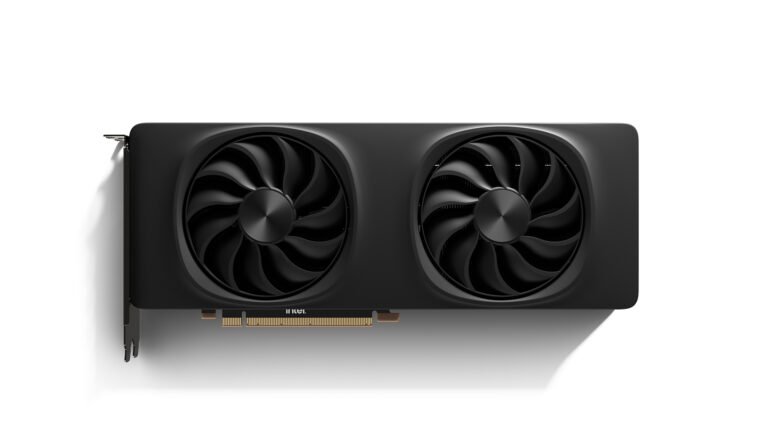
Intel’s current B-series value card offers a useful 12GB memory capacity at a lower tier, making it interesting where the exact games and applications are known to work well.
Best for: Value-focused 1080p/1440p builds wanting 12GB VRAM
Potential drawback: Game and creator-software compatibility still deserves a per-app check
Research assessment
Intel’s current B-series value card offers a useful 12GB memory capacity at a lower tier, making it interesting where the exact games and applications are known to work well. Treat the price shown on the category page as an indicative UK range, not a live quote.
- Value-focused 1080p/1440p builds wanting 12GB VRAM
- Intel’s current B-series value card offers a useful 12GB memory capacity at a lower tier, making it interesting where the exact games and applications are known to work well
- Game and creator-software compatibility still deserves a per-app check
- Check exact model, compatibility and current UK availability before buying
Sources and evidence notes (2)
This editorial synthesis does not represent a hands-on test by The Tools and Tech. Source links are references, not affiliate links. Research depth: Official product information plus current independent category context.
- Intel Arc B580 12GB official product information (opens in a new tab) (manufacturer / official)
- Current independent category/workload context (opens in a new tab) (independent category guidance)
Price and availability can change. Check the retailer for the latest information.
Intel’s current B-series value card offers a useful 12GB memory capacity at a lower tier, making it interesting where the exact games and applications are known to work well. The current category price marker is ~£220–£300. That is an indicative UK range rather than a live quote, so compare current stock and exact board/kit/capacity before deciding.
Why it fits: Value-focused 1080p/1440p builds wanting 12GB VRAM. The main check is game and creator-software compatibility still deserves a per-app check. This guide is research-based; performance, acoustics, fit and reliability should not be described as first-hand experience unless The Tools and Tech later tests the exact item.
Entry GeForce pick: NVIDIA GeForce RTX 5060 8GB
Entry GeForce pick
NVIDIA GeForce RTX 5060 8GB
Indicative price: ~£275–£330
Category-supported evidence · sources checked 26 August 2026
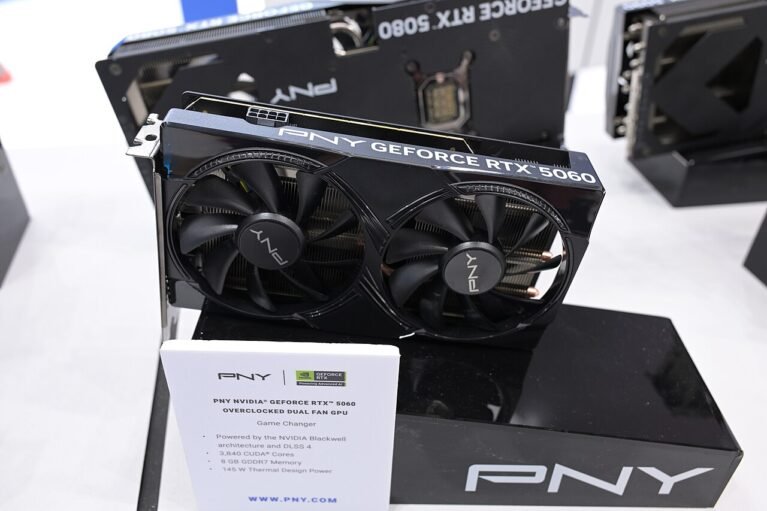
A current Blackwell entry card with DLSS, Studio drivers and NVIDIA software support, but its 8GB capacity needs more scrutiny than the badge alone suggests.
Best for: 1080p gaming and NVIDIA creator/AI features on a controlled budget
Potential drawback: 8GB VRAM can be restrictive in memory-heavy games and workloads
Research assessment
A current Blackwell entry card with DLSS, Studio drivers and NVIDIA software support, but its 8GB capacity needs more scrutiny than the badge alone suggests. Treat the price shown on the category page as an indicative UK range, not a live quote.
- 1080p gaming and NVIDIA creator/AI features on a controlled budget
- A current Blackwell entry card with DLSS, Studio drivers and NVIDIA software support, but its 8GB capacity needs more scrutiny than the badge alone suggests
- 8GB VRAM can be restrictive in memory-heavy games and workloads
- Check exact model, compatibility and current UK availability before buying
Sources and evidence notes (2)
This editorial synthesis does not represent a hands-on test by The Tools and Tech. Source links are references, not affiliate links. Research depth: Official product information plus current independent category context.
- NVIDIA GeForce RTX 5060 8GB official product information (opens in a new tab) (manufacturer / official)
- Current independent category/workload context (opens in a new tab) (independent category guidance)
Price and availability can change. Check the retailer for the latest information.
A current Blackwell entry card with DLSS, Studio drivers and NVIDIA software support, but its 8GB capacity needs more scrutiny than the badge alone suggests. The current category price marker is ~£275–£330. That is an indicative UK range rather than a live quote, so compare current stock and exact board/kit/capacity before deciding.
Why it fits: 1080p gaming and NVIDIA creator/AI features on a controlled budget. The main check is 8GB VRAM can be restrictive in memory-heavy games and workloads. This guide is research-based; performance, acoustics, fit and reliability should not be described as first-hand experience unless The Tools and Tech later tests the exact item.
Mainstream VRAM/value pick: AMD Radeon RX 9060 XT 16GB
Mainstream VRAM/value pick

AMD Radeon RX 9060 XT 16GB
Indicative price: ~£350–£500
Category-supported evidence · sources checked 26 August 2026
The 16GB version gives mainstream buyers more memory headroom than many competing cards and can be a strong value route when the games you play favour Radeon.
Best for: Mainstream 1080p/1440p buyers prioritising 16GB and raster value
Potential drawback: Ray-tracing/software feature support may trail the GeForce alternative in some titles
Research assessment
The 16GB version gives mainstream buyers more memory headroom than many competing cards and can be a strong value route when the games you play favour Radeon. Treat the price shown on the category page as an indicative UK range, not a live quote.
- Mainstream 1080p/1440p buyers prioritising 16GB and raster value
- The 16GB version gives mainstream buyers more memory headroom than many competing cards and can be a strong value route when the games you play favour Radeon
- Ray-tracing/software feature support may trail the GeForce alternative in some titles
- Check exact model, compatibility and current UK availability before buying
Sources and evidence notes (2)
This editorial synthesis does not represent a hands-on test by The Tools and Tech. Source links are references, not affiliate links. Research depth: Official product information plus current independent category context.
- AMD Radeon RX 9060 XT 16GB official product information (opens in a new tab) (manufacturer / official)
- Current independent category/workload context (opens in a new tab) (independent category guidance)
Price and availability can change. Check the retailer for the latest information.
The 16GB version gives mainstream buyers more memory headroom than many competing cards and can be a strong value route when the games you play favour Radeon. The current category price marker is ~£350–£500. That is an indicative UK range rather than a live quote, so compare current stock and exact board/kit/capacity before deciding.
Why it fits: Mainstream 1080p/1440p buyers prioritising 16GB and raster value. The main check is ray-tracing/software feature support may trail the GeForce alternative in some titles. This guide is research-based; performance, acoustics, fit and reliability should not be described as first-hand experience unless The Tools and Tech later tests the exact item.
Best high-end Radeon value: AMD Radeon RX 9070 XT
Best high-end Radeon value
AMD Radeon RX 9070 XT
Indicative price: ~£600–£800
Category-supported evidence · sources checked 26 August 2026
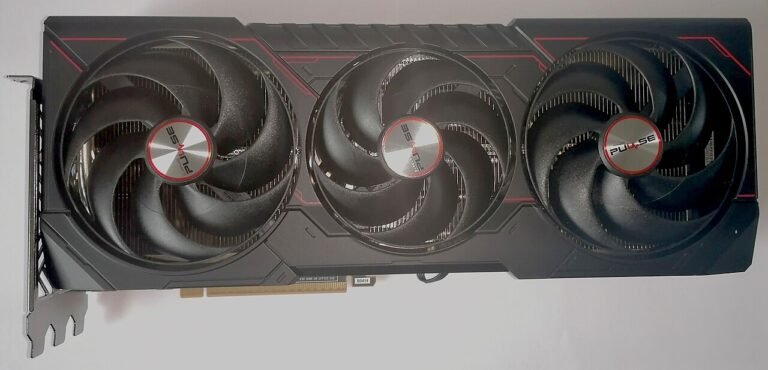
A high-end 16GB Radeon that can undercut comparable GeForce pricing while still delivering serious 4K capability.
Best for: 1440p/4K gaming where baseline performance per pound matters
Potential drawback: NVIDIA currently has broader adoption of some advanced upscaling and ray-tracing features
Research assessment
A high-end 16GB Radeon that can undercut comparable GeForce pricing while still delivering serious 4K capability. Treat the price shown on the category page as an indicative UK range, not a live quote.
- 1440p/4K gaming where baseline performance per pound matters
- A high-end 16GB Radeon that can undercut comparable GeForce pricing while still delivering serious 4K capability
- NVIDIA currently has broader adoption of some advanced upscaling and ray-tracing features
- Check exact model, compatibility and current UK availability before buying
Sources and evidence notes (2)
This editorial synthesis does not represent a hands-on test by The Tools and Tech. Source links are references, not affiliate links. Research depth: Official product information plus current independent category context.
- AMD Radeon RX 9070 XT official product information (opens in a new tab) (manufacturer / official)
- Current independent category/workload context (opens in a new tab) (independent category guidance)
Price and availability can change. Check the retailer for the latest information.
A high-end 16GB Radeon that can undercut comparable GeForce pricing while still delivering serious 4K capability. The current category price marker is ~£600–£800. That is an indicative UK range rather than a live quote, so compare current stock and exact board/kit/capacity before deciding.
Why it fits: 1440p/4K gaming where baseline performance per pound matters. The main check is nVIDIA currently has broader adoption of some advanced upscaling and ray-tracing features. This guide is research-based; performance, acoustics, fit and reliability should not be described as first-hand experience unless The Tools and Tech later tests the exact item.
Best balanced high-end GeForce: NVIDIA GeForce RTX 5070 Ti 16GB
Best balanced high-end GeForce
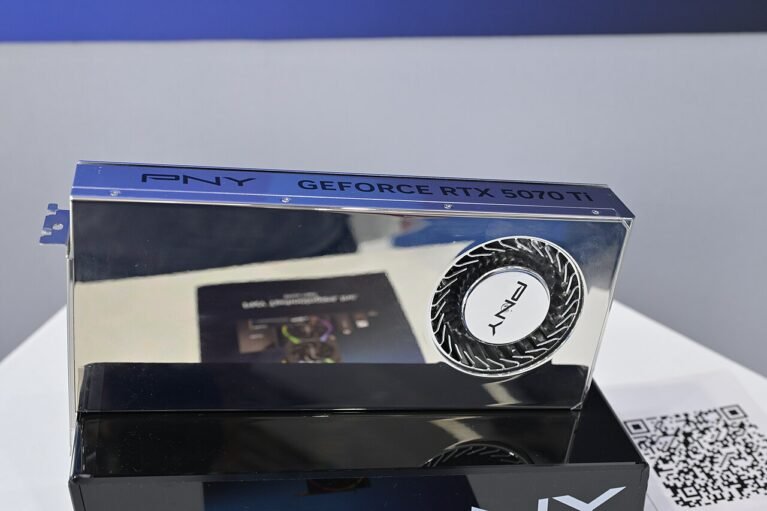
NVIDIA GeForce RTX 5070 Ti 16GB
Indicative price: ~£800–£1,000
Category-supported evidence · sources checked 26 August 2026
A 16GB Blackwell card that combines strong gaming performance with DLSS, ray tracing, Studio drivers, CUDA and broad creator software support.
Best for: High-end 1440p/4K gaming plus creator and CUDA workloads
Potential drawback: Street pricing can be far above NVIDIA’s original MSRP
Research assessment
A 16GB Blackwell card that combines strong gaming performance with DLSS, ray tracing, Studio drivers, CUDA and broad creator software support. Treat the price shown on the category page as an indicative UK range, not a live quote.
- High-end 1440p/4K gaming plus creator and CUDA workloads
- A 16GB Blackwell card that combines strong gaming performance with DLSS, ray tracing, Studio drivers, CUDA and broad creator software support
- Street pricing can be far above NVIDIA’s original MSRP
- Check exact model, compatibility and current UK availability before buying
Sources and evidence notes (2)
This editorial synthesis does not represent a hands-on test by The Tools and Tech. Source links are references, not affiliate links. Research depth: Official product information plus current independent category context.
- NVIDIA GeForce RTX 5070 Ti 16GB official product information (opens in a new tab) (manufacturer / official)
- Current independent category/workload context (opens in a new tab) (independent category guidance)
Price and availability can change. Check the retailer for the latest information.
A 16GB Blackwell card that combines strong gaming performance with DLSS, ray tracing, Studio drivers, CUDA and broad creator software support. The current category price marker is ~£800–£1,000. That is an indicative UK range rather than a live quote, so compare current stock and exact board/kit/capacity before deciding.
Why it fits: High-end 1440p/4K gaming plus creator and CUDA workloads. The main check is street pricing can be far above NVIDIA’s original MSRP. This guide is research-based; performance, acoustics, fit and reliability should not be described as first-hand experience unless The Tools and Tech later tests the exact item.
Premium creator/4K pick: NVIDIA GeForce RTX 5080 16GB
Premium creator/4K pick
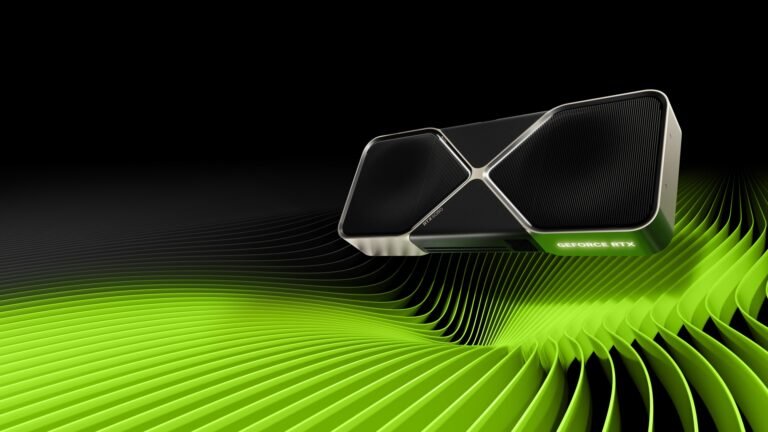
NVIDIA GeForce RTX 5080 16GB
Indicative price: ~£1,100–£1,500
Category-supported evidence · sources checked 26 August 2026
A premium Blackwell card with strong gaming and creator acceleration for buyers who need more throughput than the 5070 Ti but cannot justify a 5090.
Best for: Premium 4K gaming, video work and GPU-accelerated creative applications
Potential drawback: 16GB may be less attractive than the price suggests for very large local-AI workloads
Research assessment
A premium Blackwell card with strong gaming and creator acceleration for buyers who need more throughput than the 5070 Ti but cannot justify a 5090. Treat the price shown on the category page as an indicative UK range, not a live quote.
- Premium 4K gaming, video work and GPU-accelerated creative applications
- A premium Blackwell card with strong gaming and creator acceleration for buyers who need more throughput than the 5070 Ti but cannot justify a 5090
- 16GB may be less attractive than the price suggests for very large local-AI workloads
- Check exact model, compatibility and current UK availability before buying
Sources and evidence notes (2)
This editorial synthesis does not represent a hands-on test by The Tools and Tech. Source links are references, not affiliate links. Research depth: Official product information plus current independent category context.
- NVIDIA GeForce RTX 5080 16GB official product information (opens in a new tab) (manufacturer / official)
- Current independent category/workload context (opens in a new tab) (independent category guidance)
Price and availability can change. Check the retailer for the latest information.
A premium Blackwell card with strong gaming and creator acceleration for buyers who need more throughput than the 5070 Ti but cannot justify a 5090. The current category price marker is ~£1,100–£1,500. That is an indicative UK range rather than a live quote, so compare current stock and exact board/kit/capacity before deciding.
Why it fits: Premium 4K gaming, video work and GPU-accelerated creative applications. The main check is 16GB may be less attractive than the price suggests for very large local-AI workloads. This guide is research-based; performance, acoustics, fit and reliability should not be described as first-hand experience unless The Tools and Tech later tests the exact item.
Extreme performance / VRAM pick: NVIDIA GeForce RTX 5090 32GB
Extreme performance / VRAM pick
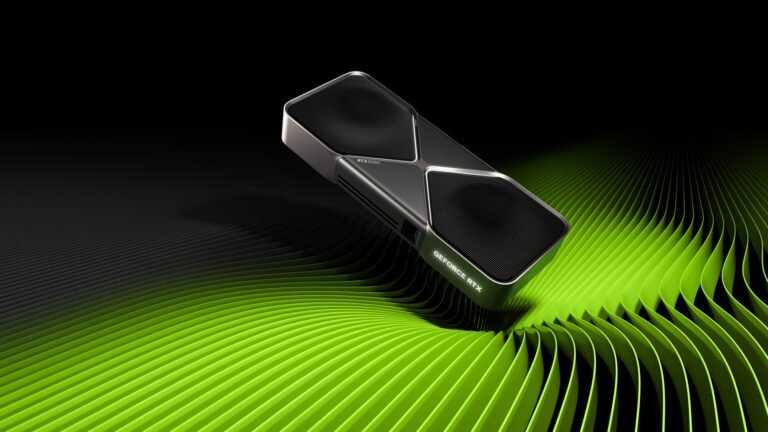
NVIDIA GeForce RTX 5090 32GB
Indicative price: ~£3,400–£4,000+
Category-supported evidence · sources checked 26 August 2026
The flagship consumer Blackwell card is most defensible when its 32GB VRAM or top-end compute/rendering performance enables work that lower tiers cannot do.
Best for: Maximum consumer GPU performance, 32GB VRAM, demanding Blender/local-AI work
Potential drawback: Extremely poor value for ordinary gaming and very demanding power/cooling requirements
Research assessment
The flagship consumer Blackwell card is most defensible when its 32GB VRAM or top-end compute/rendering performance enables work that lower tiers cannot do. Treat the price shown on the category page as an indicative UK range, not a live quote.
- Maximum consumer GPU performance, 32GB VRAM, demanding Blender/local-AI work
- The flagship consumer Blackwell card is most defensible when its 32GB VRAM or top-end compute/rendering performance enables work that lower tiers cannot do
- Extremely poor value for ordinary gaming and very demanding power/cooling requirements
- Check exact model, compatibility and current UK availability before buying
Sources and evidence notes (2)
This editorial synthesis does not represent a hands-on test by The Tools and Tech. Source links are references, not affiliate links. Research depth: Official product information plus current independent category context.
- NVIDIA GeForce RTX 5090 32GB official product information (opens in a new tab) (manufacturer / official)
- Current independent category/workload context (opens in a new tab) (independent category guidance)
Price and availability can change. Check the retailer for the latest information.
The flagship consumer Blackwell card is most defensible when its 32GB VRAM or top-end compute/rendering performance enables work that lower tiers cannot do. The current category price marker is ~£3,400–£4,000+. That is an indicative UK range rather than a live quote, so compare current stock and exact board/kit/capacity before deciding.
Why it fits: Maximum consumer GPU performance, 32GB VRAM, demanding Blender/local-AI work. The main check is extremely poor value for ordinary gaming and very demanding power/cooling requirements. This guide is research-based; performance, acoustics, fit and reliability should not be described as first-hand experience unless The Tools and Tech later tests the exact item.
What to look for
Resolution and refresh rate
A GPU that is ideal for 1080p can be poor value at 4K and vice versa. Match the card to the monitor you actually plan to use, then check current benchmark data at that resolution.
VRAM
VRAM limits can appear before raw GPU compute runs out. Texture-heavy games, 3D scenes and local AI can make 8GB or 12GB a harder ceiling than an average FPS chart suggests.
Software ecosystem
NVIDIA, AMD and Intel differ in ray tracing, upscaling, encoding, CUDA/OptiX and application support. Check the exact workload rather than treating all GPU acceleration as interchangeable.
Power and fit
Check PSU recommendation, native power connectors, card length, thickness and case airflow. Premium cards can turn a previously balanced build into a thermal and power problem.
How we researched this guide
We checked current NVIDIA, AMD and Intel product information and compared the tiers against independent 2026 GPU testing. For creator and 3D context we also considered current workstation guidance.
Street prices change too quickly to make a fixed price the recommendation. Verify the exact UK board model, price, warranty and availability before buying; any prices-checked date on this guide should only be updated after a fresh check.
Frequently asked questions
How much should I spend on a graphics card?
Gaming builds often benefit from putting the largest single component budget into the GPU, but the right share depends on monitor resolution, CPU and total budget. Office and word-processing PCs often need no discrete GPU.
Is 8GB VRAM enough in 2026?
It can still be enough for some 1080p use, but it is increasingly a constraint in high-resolution gaming, heavy assets and compute workloads. Buy against the software you use rather than a universal number.
Which GPU is best for Blender or local AI?
NVIDIA currently has broad CUDA/OptiX and AI-framework support, and high VRAM can be decisive. The exact model should be chosen from the workload’s memory requirement and supported software stack.
Primary sources reviewed
- NVIDIA GeForce RTX 50 Series specifications and UK MSRP context (opens in a new tab)
- AMD Radeon RX 9070 XT official product information (opens in a new tab)
- Tom’s Hardware Best Graphics Cards 2026 (opens in a new tab)
- Puget Systems Blender hardware recommendations (opens in a new tab)
Final verdict
The best GPU is the one that fits the target resolution or workload without forcing compromises elsewhere. The 5070 Ti is the broad high-end all-rounder to compare first, the 9070 XT is a strong value-focused gaming alternative, and the 5090 should be treated as specialist hardware for buyers who can explain why they need 32GB or maximum throughput.